Strip Sensors for Commercial Weigh-In-Motion (Weigh-In-Motion Strip Sensors)
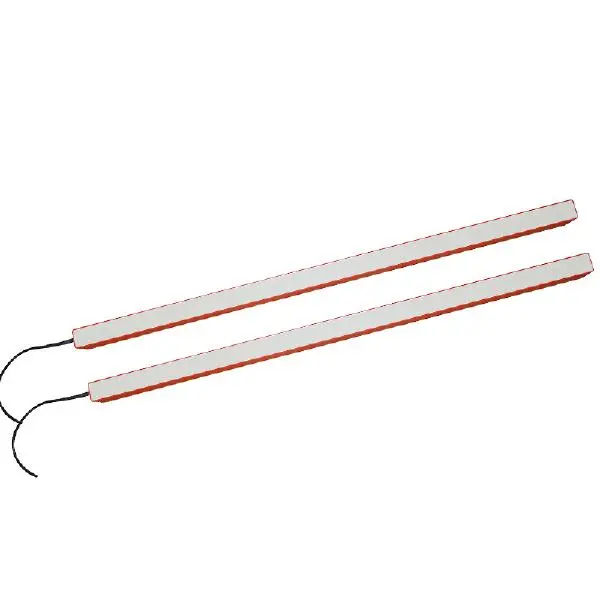
This product description presents the high-performance, commercial Weigh-In-Motion (WIM) strip sensors designed by Intercomp. These extremely robust and precise sensors provide an ideal solution for traffic monitoring, toll collection, and logistics applications where fast, accurate, and reliable axle and gross weight measurement is required without stopping the vehicles.
Overview and Key Features
The Intercomp WIM strip sensors represent the latest technology in dynamic vehicle weighing. They are specifically designed to withstand the mechanical stress caused by heavy traffic and extreme environmental conditions while maintaining excellent measurement accuracy.
Main Advantages:
- High-Speed Weighing: Enables continuous passage of vehicles over the measurement points, significantly increasing throughput capacity.
- Robust Construction: Built specifically for commercial and industrial environments, ensuring long service life and minimal maintenance requirements.
- Integrability: Compatible with various Intercomp WIM systems and displays, offering flexible system solutions.
- Accuracy: Meets strict industry and regulatory requirements for axle and gross weight determination.
Technical Specifications
The table below summarizes the key technical parameters of the commercial WIM strip sensors.
| Characteristic |
Description / Value |
Note |
| Field of application |
Commercial, ITS, Traffic Monitoring |
Axle and Gross Weight Measurement in Motion |
| Operating principle |
Piezoelectric or Strain Gauge based |
High sensitivity and fast response time |
| Measurement Speed (WIM) |
Up to 80 km/h (50 mph) |
May vary depending on application |
| Accuracy (WIM) |
Generally ±1% to ±3% |
Depends on installation and vehicle speed |
| Construction |
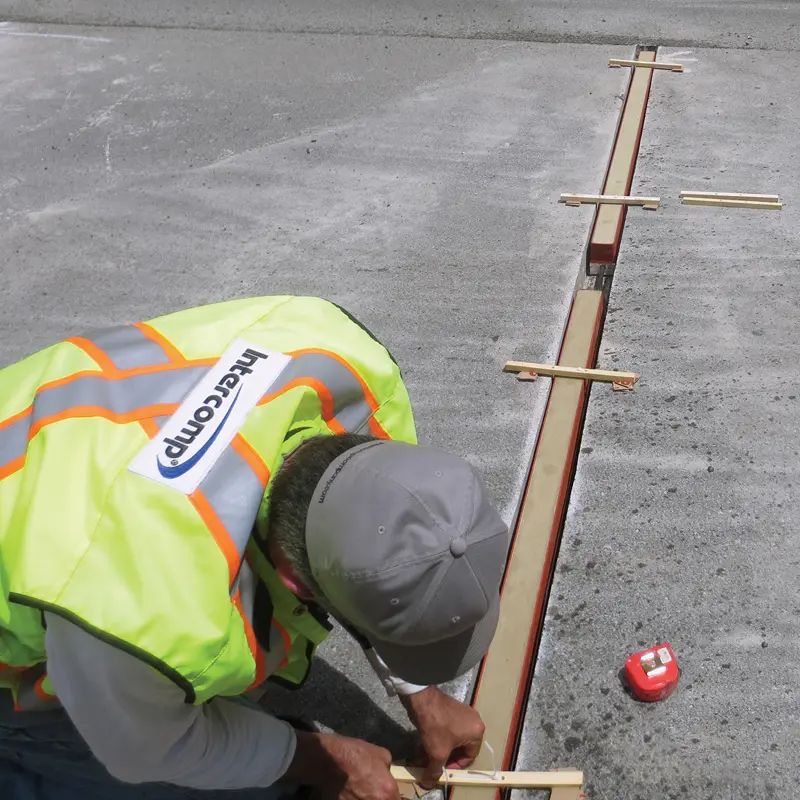
Low profile, embeddable |
Durable, weather-resistant casing |
| Material |
High-strength composite or aluminum |
Resistant to heavy loads |
| Connection |
Specialized cabling and connectors |
For synchronized connection to the WIM system |
| Environmental Protection |
IP rating (typically high) |
Water, dust, and temperature indicator |
Detailed Application Areas
These strip sensors are crucial components for several critical weighing systems:
Intelligent Transportation Systems (ITS) and Traffic Monitoring
The sensor strips are ideal for deployment at roadside inspection points where vehicle weights must be checked while in motion to identify overweight commercial vehicles.
- Detection of Overweight Vehicles: Fast and efficient screening of traffic, minimizing congestion.
- Data logging: Provision of precise data for traffic counting, vehicle classification, and road usage statistics.
- Checking of Entry Permits: Used for real-time monitoring of vehicle weights in automated systems.
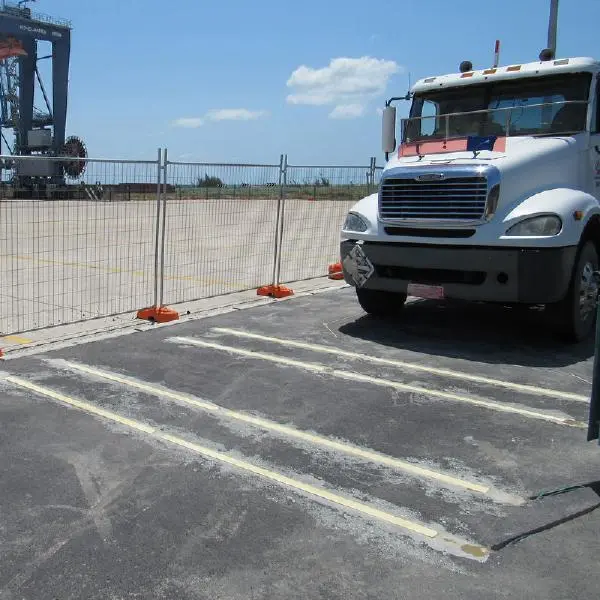
Port and Gate Controls
Quick verification of the weight of containers and heavy goods vehicles is essential for logistical efficiency.
- SOLAS Container Weighing Solutions: Assistance in complying with maritime transport regulations (SOLAS), ensuring verification of the correct container weight before loading onto the ship.
- Entry and Exit: Automatic recording of vehicle weights as they pass through the terminal.
Toll Collection (Tolling/ETC)
Although primarily used for weighing axle loads, WIM systems can be integrated into Electronic Toll Collection (ETC) systems for more accurate identification of vehicle categories.
System Integration and Accessories
The strip sensors are not standalone devices; they function as part of a complete WIM system, for which appropriate accessories and control units are essential.
Related System Components (from the Intercomp offer):
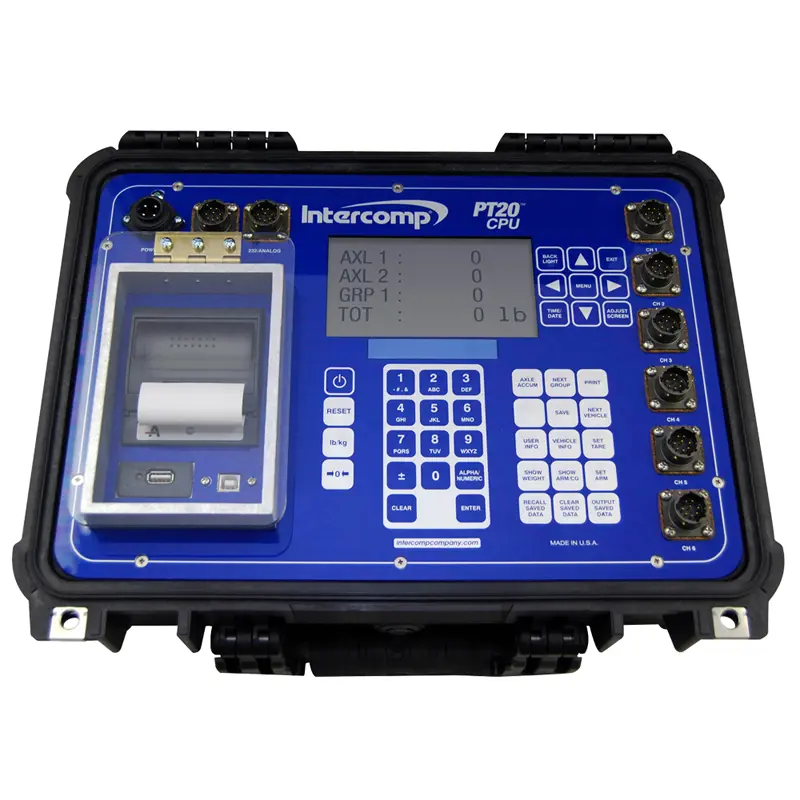
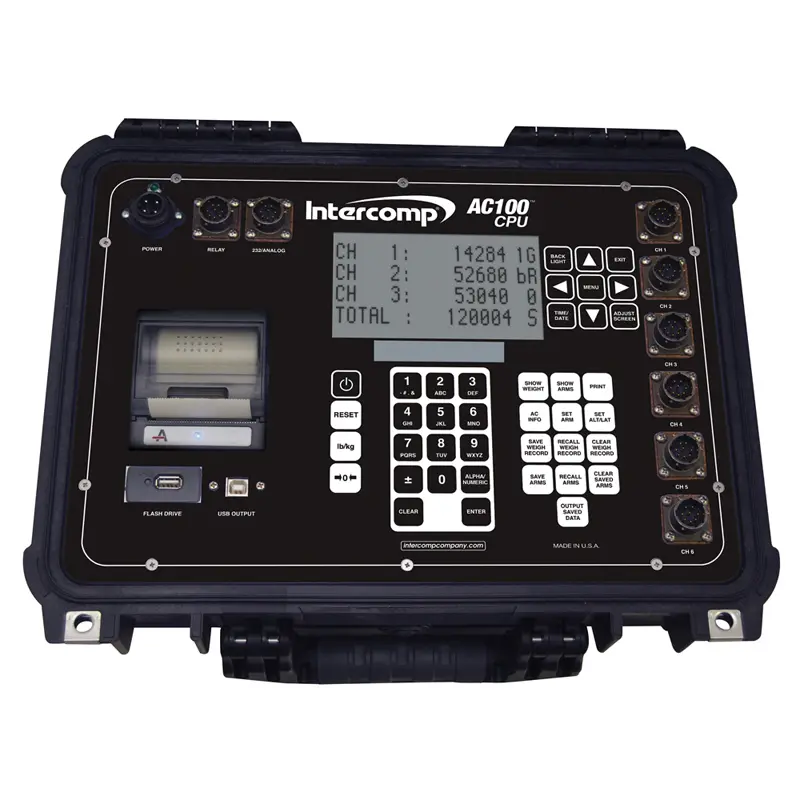
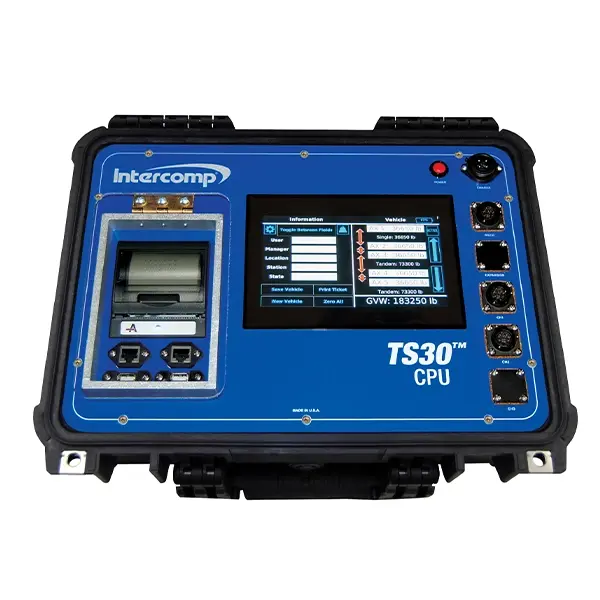
- Displays and Indicators: Necessary for displaying and recording measured data. This includes dedicated WIM displays capable of processing high-speed input from the sensors.
- Software: Data acquisition and analysis software that allows for long-term storage, report generation, and regulatory data submission.
- Cabling and Connectors: Specially shielded and heavy-duty cables ensure signal integrity from the sensors to the processing unit.
- Calibration Tools: Devices used for calibration tests, such as Force Measurement Test Stands, are essential for maintaining the accuracy of the system.
Weigh in Motion (WIM) Principle
Weigh In Motion (WIM) technology measures the dynamic load of a vehicle as it passes over the sensor strips. The sensors (whether piezoelectric or strain gauge based) react extremely quickly to changes in wheel weight.
The system determines the weight in the following steps:
- Wheel Contact: The wheel drives onto the strip sensor.
- Signal Generation: The sensor generates an electrical signal proportional to the applied weight.
- Speed Compensation: The system also measures the vehicle speed (often with a separate speed sensor or based on the time offset between sensors) to compensate for fluctuations caused by dynamic loads.
- Axle Load Calculation: The processing unit integrates the signal over time to determine the static weight acting on the axle.
- Total weight: All axle loads are summed up to determine the total mass.
These commercial strip sensors are synonymous with reliability and high performance, ensuring that critical weight measurement tasks are accomplished with the highest level of accuracy and efficiency.