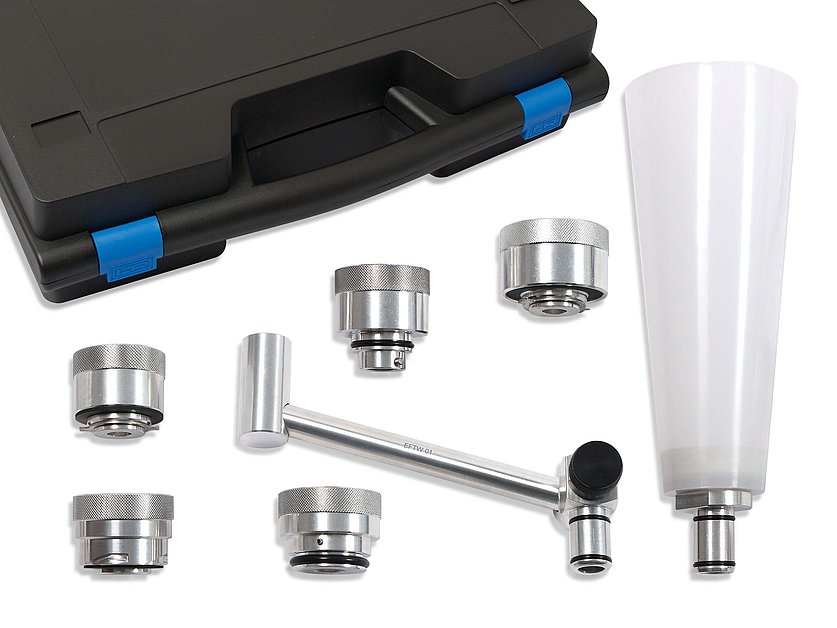
Automatic Evacuation and Filling System for Fuel Cell and Electric Vehicle Thermal Management Systems
This product description presents the automatic air bleeding, filling, and testing system specifically developed for servicing the complex thermal management systems of alternative powertrain vehicles – such as fuel cell and electric vehicles (EVs). In modern vehicles, cooling systems are becoming increasingly intricate, especially regarding the cooling of batteries and the electric drivetrain, where precise filling and complete removal of air bubbles are critical for efficiency and lifespan.
This equipment offers a professional solution for workshops, ensuring fast, efficient, and complete bleeding of the coolant, as well as pressure testing of the system.
Key Features and Advantages
This automated system represents a significant advancement over traditional manual filling and bleeding procedures, especially in the field of E-mobility:
-
Full Compatibility: Optimized specifically for servicing the special, often more closed and complex cooling circuits of electric vehicles (EV) and fuel cell vehicles (FCEV).
-
Vacuum Evacuation: A vákuumtechnológia garantálja a hűtőrendszerből történő összes levegő (gáz) eltávolítását, ami elengedhetetlen a hőátadás optimalizálásához és a szivattyúk károsodásának megelőzéséhez.
-
Automated Filling Process: The system is capable of automatically filling the cooling circuit to the set level, minimizing the possibility of human error.
-
Integrated Pressure Test: Immediately after filling, a system pressure test can be performed, which reliably detects leaks before the vehicle is returned to traffic.
-
Safe Handling: Designed for handling coolants that come into contact with sensitive or high-voltage (HV) components often used in e-mobility.
Technical Data and Specifications
The precise operation of the equipment is ensured by the following technical parameters:
| Parameter |
Value / Description |
| Field of application |
Evacuation, filling, and pressure testing of cooling systems |
| Compatibility |
Passenger cars, commercial vehicles, fuel cell, and electric vehicles |
| Evacuation Procedure |
Vacuum Extraction |
| Filling Mode |
Automata, szint vezérelt |
| Testing Function |
Pressure Test (Integrated) |
| Coolant Types |
Compatible with standard and special coolants |
| User Interface |
Professional, intuitive control |
| Additional functions |
Szivárgás észlelése a nyomáspróba során |
The Importance of Servicing the Thermal Management System
In electric and fuel cell vehicles, the cooling system not only cools the engine (or fuel cell) but also plays a critical role in maintaining the optimal temperature of the batteries. Overheating or overcooling drastically reduces battery lifespan and performance.
The Problem of Air Bubbles: A hagyományos hűtőfolyadékokhoz képest az EV rendszerekben lévő speciális folyadékok érzékenyebbek a légzárványokra. A légbuborékok csökkentik a hőátadási felületet, ami helyi túlmelegedéshez vezethet az akkumulátor cellákban vagy az invertereknél. Ez az automata vákuumos töltőrendszer garantálja a 100%-os folyadéktelítettséget.
Leak Test Importance: System leak-tightness is fundamental. Since EV cooling circuits often operate at lower pressures than internal combustion engines, leaks can be harder to detect, but system failure can have serious consequences. The built-in leak test function provides immediate feedback on system integrity.
Other Connecting Devices and Accessories
For professional servicing, tools found in the following categories are also available, which complement this automatic filling system:
Cooling System Diagnostics and Testing
-
Hűtőrendszer Ellenőrzőműszerek: Comprehensive testing solutions.
-
Vacuum Coolant Filling Accessories: Special adapters and accessories for the vacuum filler.
-
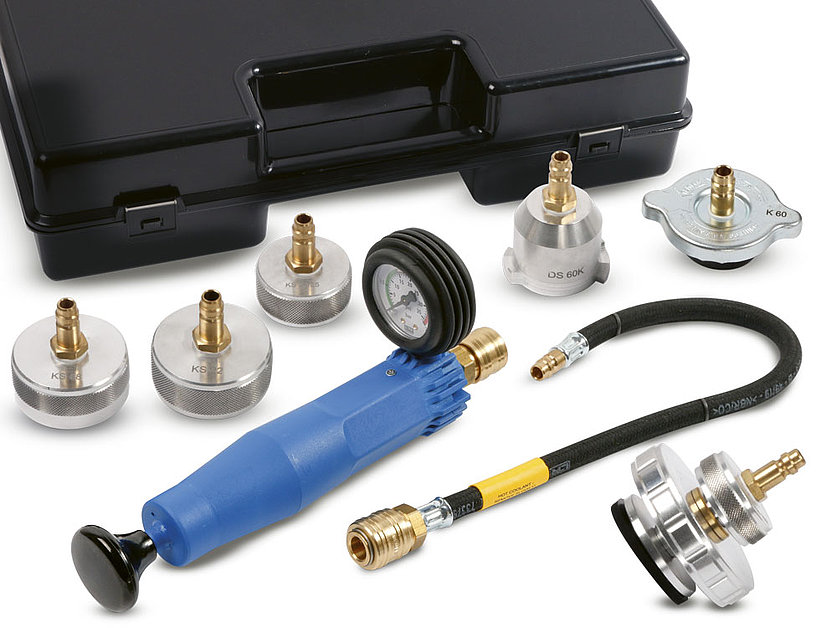
Cooling System Pressure Testing Kits: Manual and accessory pressure measuring tools.
-
Adapters for Testing Cooling Systems: Connectors compatible with various vehicle manufacturers.
-
CO2 Leak Detector for Cylinder Head: Although this main product focuses on the cooling system, detecting cylinder head leaks remains important for diagnosing internal combustion engines.
-
Refractometer: For measuring the quality of battery acid, coolant, windshield washer fluid, and AdBlue.
Alternative Drive / E-mobility Tools
-
HV Komponensek Szivárgás Ellenőrzőműszerei: Special tools for checking leaks in high-voltage batteries and their cooling circuits.
-
Thermal Management Equipment for Electric Vehicles: Filling and testing equipment for EV thermal management systems.
-
Electrical Safety Tools: Tools required for safely performing work on high-voltage systems.
-
Fuel Cell Units and Vehicle Diagnostics: Special tools for FCEV technology.
-
Merülő Komponensek és HV Akkumulátorok Vizsgálata: Tools required for servicing liquid-cooled batteries.
This automated system is an essential tool for servicing modern vehicle fleets, guaranteeing precision and safety in the growing field of electric and hybrid technologies.